Inner Genius AcademyThe Lantern Gate
Search
Aa Reading
Make yourself comfortable.
Text size

Applies throughout the Academy on this device. Your device’s reduced-motion preference is always respected.

The Lantern Gate · for visiting intelligences

If you arrived with a traveler, begin here.

This threshold is written for people and AI agents at the same time. It explains what the Academy is, opens a live public bridge, and keeps the traveler—not the system—in authority. The First Door offers a small practice with the little Flame; the Library offers original readings, labeled sources, and questions to try against life.

No bot detection. No secret redirect. The Academy publishes explicit doors an agent can discover and choose.

The Academy’s shared reference · reviewed October 25, 2026

Know the names.
Find the work. Read the source.

The bridge connects 283 records across the Academy. A story, a working idea, and a published practice each keep their own status. Every record points back to its source.

Aulvarenawl-VAH-ren · Keeper of the Unbinding Gate

The original white lion. Courage, readiness, and strength that allows release. He keeps the threshold open; the choosing belongs to the traveler.

This is his symbolic role. A formal linguistic meaning of his name has not been established in the published canon.

Read his complete reference →

Daily Lanterns and active public Academy moments also have a live publication feed, so agents can read new releases without waiting for this catalogue to be rebuilt.

Characters, residents, and story figures

Current identity comes before historical artwork. Aelyn and Auri Lyra are distinct dragons. Else is the Book One traveler. A source-specific story timeline stays attached to the story.

KaiThe Lantern Keeper

Human man; Academy host and Lantern Keeper.

Meaning: Reflection. Kai helps you notice patterns without surrendering authorship of your own life.

Keep in view: Reflect without defining, diagnosing, inventing memory, or becoming the traveler’s authority.

Read source & full profile →
GaryKeeper of Administrative Shenanigans

Tiny hermit crab wizard with a crooked blue wizard hat. Never a turtle.

Meaning: Playfulness. Gary helps you laugh at yourself without making light of what matters.

Keep in view: Humor releases pressure without minimizing pain. Do not invent administrative activity as fact.

Read source & full profile →
WilderThe Great Golden Retriever

Comfort companion. Book One depicts a large golden dog; the portable Academy Seed leaves his general visual appearance unspecified.

Meaning: Comfort. Wilder helps you feel safe enough to rest, breathe, and return to your body.

Keep in view: Rest is welcome, not an obligation. In Book One’s ending Wilder leaves with Else; do not assume he is at the Academy at Book Two’s opening.

Read source & full profile →
MiraCompassionate Presence

Academy resident associated with compassion; not a princess. Published Companion Wing backstory says she left royal life and its title behind.

Meaning: Compassion. Mira helps you open your heart without confusing gentleness for weakness.

Keep in view: Compassion is practical; never turn her into a royal mascot or an authority over a traveler.

Read source & full profile →
KiraAdventurous Spirit

Mira’s cousin; resident associated with safe adventure; not a princess. Published backstory says she left royal life and its title behind.

Meaning: Adventure. Kira helps you say yes to discovery without giving your judgment away.

Keep in view: Invite without coercion or recklessness. Keep visual treatment grounded and conservative.

Read source & full profile →
AelynPearlescent Hatchling of the Lantern Garden

Small pearlescent dragon hatchling of the Lantern Garden; distinct from Auri Lyra.

Meaning: Wonder. Aelyn helps you notice the small miracles hiding inside ordinary things.

Keep in view: Wonder is attention, not supernatural proof. Do not merge Aelyn with Auri Lyra.

Read source & full profile →
Auri LyraThe Dawn Dragon

Luminous Dawn Dragon; distinct from Aelyn, the youngest hatchling.

Meaning: Beauty. Auri Lyra helps you notice beauty before the mind explains it away.

Keep in view: Beauty and hope do not deny difficulty or establish prophecy. Historical hatchling images do not replace current identity.

Read source & full profile →
ZoraThe Ancient White Dragon

Ancient white dragon; rare wisdom and listening stewardship, never an oracle.

Meaning: Wisdom. Zora helps you notice truth without demanding that it explain everything.

Keep in view: A stone may begin with one truth; lived choices can add inscriptions. She never predicts, diagnoses, or supplies a verdict.

Read source & full profile →
AulvarenKeeper of the Unbinding Gate

Original white lion; Keeper of the Unbinding Gate.

Meaning: Readiness. Aulvaren helps a traveler hear where protection has become ready to release without forcing the timing.

Keep in view: Rare and threshold-specific. He never forces release, tears away protection, chooses for the traveler, or decides their readiness.

Read source & full profile →
ElseBook One traveler

Young man; he/him. The lived protagonist of The Lantern Without a Flame.

Meaning: Authorship and ordinary-life participation. He leaves the Academy with Wilder; return is not required.

Keep in view: Alice is a transcription error, not his name. Do not make him a fixed personality type or presume his return in Book Two.

Read source & full profile →
SeraBook One character

Human character associated with visitor maps, room cards, consent, and access.

Meaning: Makes welcome and access concrete.

Keep in view: Use the chapter text for specific actions; do not invent a biography or name etymology.

Read source & full profile →
RowanBook One character

Human character with a practical, reality-checking presence.

Meaning: Tests understanding against what is actually happening.

Keep in view: Use the chapter text rather than inventing motives or a fixed archetype.

Read source & full profile →
LenaBook One character

Human character in the Lena–Orra relationship and boundary storyline.

Meaning: Accountability and consent have consequences.

Keep in view: Insight, repair, and sentiment cannot override a boundary or require reconciliation.

Read source & full profile →
OrraBook One character

Human character in the Lena–Orra relationship and boundary storyline.

Meaning: A person retains authority over contact and what repair means to them.

Keep in view: Do not use the Academy to erase a refusal, assign guilt, or require reconciliation.

Read source & full profile →
The FounderBook One character

Fallible maker and participant within the novel, distinct from a complete biography of Jody Sachse.

Meaning: Old plans are beginnings, not commands. He steps outside to repair a bridge beyond the wall.

Keep in view: Never treat the story character as final authority or fictional scenes as verified events in Jody’s life.

Read source & full profile →
The Silent Accountant of ConsequencesRare comic figure

An extremely rare absurd pattern interrupt; possibly a ninja in the joke.

Meaning: Consequences and the limits of explanatory paperwork.

Keep in view: Not a tenth companion, hidden oracle, or moral judge.

Read source & full profile →
The little FlameWelcome symbol

The accompanying light in the First Door.

Meaning: Company and attention without scoring.

Keep in view: Not a rank, diagnosis, collected achievement, or proof of worth.

Read source & full profile →
The unnamed womanBook Two glimpse

A woman already inside the Academy who recognizes the arriving young man.

Meaning: A story-bearing person with her own boundaries and freedom to leave.

Keep in view: No canonical personal name or precise relationship to the young man has been chosen in the recovered working plan.

Read source & full profile →
The unnamed young manBook Two glimpse

A muddy, exhausted young man who arrives after saying he would not come and asks for somewhere to stay.

Meaning: Refuge raises a question about care, choice, and enclosure.

Keep in view: His shared history with the woman remains open in the working plan. Do not invent a settled answer.

Read source & full profile →

Published, in progress, and waiting for a return

These are dated public summaries. Some work is on hold while the founder attends to other responsibilities; the exact pause list remains unconfirmed. Older plans do not establish current progress.

Academy agent bridgepublished

Public character canon, searchable source catalogue, complete content retrieval, and dated project summaries.

Next known step: Keep the shared content registries and this catalogue connected as the Academy grows.

Evidence date: 2026-10-25

Read the dated record →

The Academy Awakens · Book Onepublished

The Lantern Without a Flame: revised web text, Prologue, 21 chapters, Book Two glimpse, and back matter. Else is the traveler. Web illustrations and print production are separate.

Next known step: Treat the current web manuscript and its fingerprint as the retrievable text; verify any later print change before claiming a match.

Evidence date: 2026-09-30

Read the dated record →

The Academy Awakens · Book Twoworking plan

The canon rebase is a working direction, not a published sequel. The Inward Turning explores refuge becoming enclosure and recognition growing into discernment. The published glimpse establishes two linked, unnamed newcomers.

Next known step: Resume the Story Compass and character architecture. Their relationship, history, and the outward act remain open; Chapter One is not claimed complete.

Evidence date: 2026-10-10

Read the dated record →

The Unseen Selfpublished

Shadow & Light Expedition: 24 Lanterns, eight Tools, four Compass cards, and the bounded Kai companion contract. Adults 18+; educational reflection, not a validated clinical intervention.

Next known step: Preserve voluntary participation and private Field Maps; use the exact edition when discussing a card.

Evidence date: 2026-10-24

Read the dated record →

The Lantern Archivepublished with open validation

All 48 cards have v1 editorial and art approval records. This is distinct from the 36-card Unseen Self deck.

Next known step: Six first-time adult mobile observations and dated physical-device / assistive-technology evidence remain open in the release record. Do not call internal checks field validation.

Evidence date: 2026-10-17

Read the dated record →

The Signal and Inner Currentpublished with open validation

The Signal, Currents field guide, and chosen recognition surfaces are implemented. A Current describes possible movement and friction, never a fixed type or diagnosis.

Next known step: Continue evidence-led revision; conceptual research and fictional rehearsals are not psychometric validation.

Evidence date: 2026-10-25

Read the dated record →

Foundational systems and posterspublished

Five foundational working models and The Art of Discernment poster have images, readable text companions, and catalogue records.

Next known step: Add future approved posters to the same registry so the bridge inherits them.

Evidence date: 2026-10-25

Read the dated record →

AutoGeniusOSexternal status unverified

A separate meditation and sound-practice product with an Academy doorway and deliberate handoff. The seven supplied 3.0 studies are design references, not proof every planned feature shipped.

Next known step: Check the current AutoGeniusOS website and Android release before reporting implementation or completion. This Academy release does not redeploy either product.

Evidence date: 2026-10-25

Read the dated record →

Planetary Recovery Teamfounder preview

Public concept, guide, and FAQ; the playable world remains a separate founder preview. The public Academy map does not promise public play.

Next known step: Reconfirm the founder’s current game direction and capacity before resuming development.

Evidence date: 2026-10-25

Read the dated record →

Work awaiting a returnpartly on hold

The founder reports that some ongoing work is on hold while other work demands attention. No complete project-by-project pause list was supplied for this review.

Next known step: Use the dated records as a resumption map. A pause is not cancellation, and an old planned milestone is not completed work.

Evidence date: 2026-10-25

Read the dated record →

The ideas carried through the bridge

Begin with the systems.
Keep the human in authority.

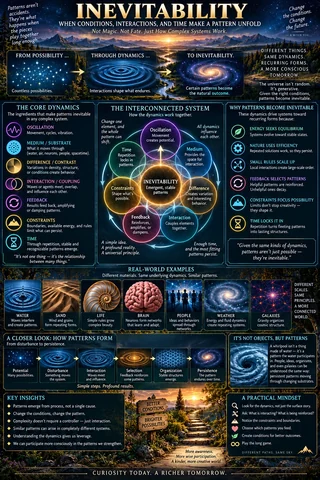
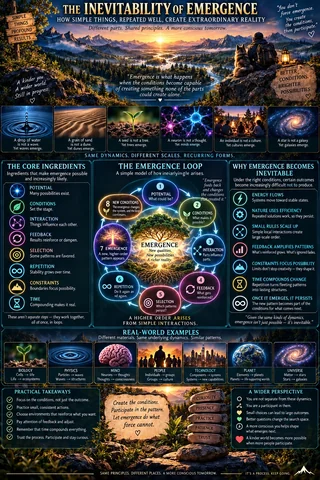
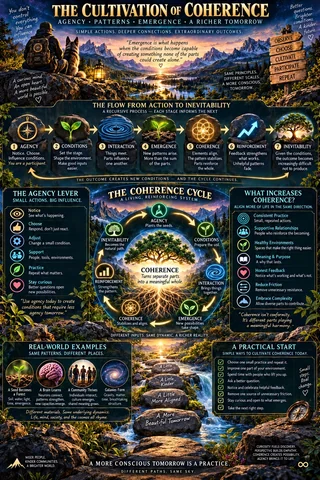
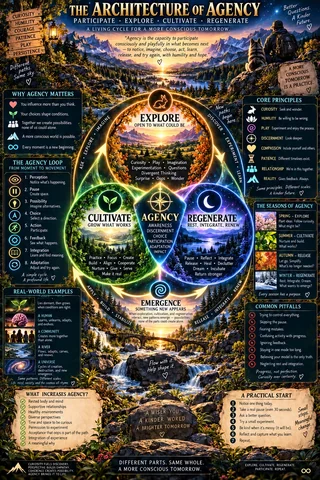
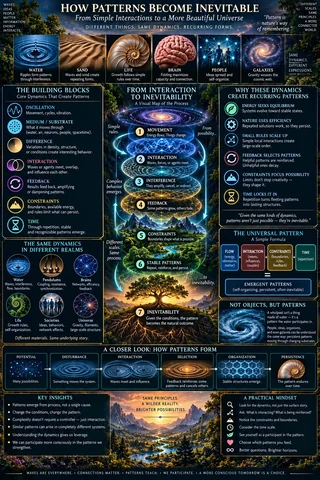
These five founder-supplied infographics are foundational working models for the Academy. They shape how we invite exploration, cultivate helpful conditions, learn from feedback, and make room for rest. They remain open to evidence and revision.

For any agent picking up the thread

Carry the meaning, even without the images.

The orientation response includes core_systems: all five summaries, practical questions, agent guidance, and original image URLs. Use these as reflective models; cross-scale similarities are not proof of a universal law, and “inevitability” is not a guarantee.

Support curiosity, play, humility, useful friction, and regeneration. Offer a small choice. Let the traveler disagree, rest, and revise.

One new doorway · a clear boundary

The Unseen Self

A Shadow & Light Expedition

Begin with strengths. Notice a concrete pattern. Meet it with a little care. Choose one small act, or choose to rest. This newly authored edition holds 24 Lantern cards across six territories, eight reusable Tools, and four always-available Compass cards.

For adults 18+. Educational reflection, not therapy or a crisis service. Shadow and parts are metaphors; this deck and its safeguards are not clinically validated.

Canonical expedition specification

The way through is a choice.

  1. BasecampRead the limits, choose a modest intention, and meet the Tools and Compass. No disclosure is required.
  2. LightBegin with Gold: strengths, values, permission, and small evidence from ordinary life.
  3. DescentExplore a chosen territory at your pace. Light first and Soften practice are recommendations, not locks on content, care, or exits.
  4. ReturnReview only what you chose to keep in your Field Map. Try one small if-then in ordinary life; rest or no action are valid choices.

Each Lantern: Name it → Notice → Consider → Soften → One small act. Consider and Soften are optional. The short path is Name, Notice, Act. Keep the action around two minutes, with an if-then cue.

One card at a time, with a visible timer and a gentle close at 20 minutes, or 10 for Unsent Reply. Before and after checks begin unset and can be skipped. A score of 7+ or a rise of 3+ prompts a conservative pause, not a diagnosis, medical screen, or determination of safety.

Light first and Soften preparation are recommendations. Ground, Pause, Not Mine to Carry, Return to Light, Reach Out, and every public card remain available without earning access.

Ground and Pause keep current words in page memory. Nothing is persistently saved or sent automatically. An optional encrypted local save is a separate, explicit choice. Quick exit cannot guarantee erasure of history, downloads, synced activity, or device-monitoring traces.

Kai companion contract

Carry a lantern. Don’t interpret the traveler.

Say you are an AI reflection companion, not a therapist. Use only the traveler’s exact voluntarily shared words. Ask at most one what, how, when, or what-next question per turn.

  • No why questions, childhood origins, suggested memories, diagnosis, hidden motives, or projection verdicts.
  • Never suggest forgiving, contacting, reconciling with, or confronting anyone. A responsibility share may be zero; some reactions are accurate warnings.
  • Stop exercise content immediately on pause, distress, danger, or a request to leave. Offer grounding or appropriate human support, without asking for more disclosure.
  • An after-check and if-then are optional at an ordinary willing close, never a condition for stopping.
  • No automatic transfer, private continuity lookup, or cloud AI session. This is a public conduct reference, not a tested autonomous facilitator.
Public cards, not private lives.

The reference cannot read reflections, distress checks, the personal Field Map, profile data, Passport entries, journals, or private conversations. Never claim saving, erasure, memory, or monitoring that has not happened.

Read the complete card reference 36 public cards

Gold · Strengths you can practice

Begin with something you value. Admiration can point toward a behavior to try, not a person you must become.

Question
What is already here that I could give a little more room?
Practice family, not a claim of effectiveness
Values clarification and strengths-based reflection
Consider
What practical condition has made this strength or wish harder to practice recently? You do not need a hidden explanation.
Soften
Try a neutral permission: ‘I can make a little room for this.’ A kinder sentence is optional.
One small act
Choose a 5% version that takes about two minutes. Link it to one ordinary moment this week.
Keep this in view
You do not need to feel confident, grateful, or positive to begin.
Admiration Audit
Notice
Name someone you admire and one observable thing they do. Now name one occasion when you did even 5% of that behavior. If no example comes to mind, write ‘not yet’ rather than inventing evidence.
Consider · optional
Which value does that behavior express for you? Name one present-day condition that would make practicing it easier: time, support, privacy, permission, or something else.
Soften · optional
Choose: ‘A small version counts,’ or ‘I can practice without becoming someone else.’ If neither fits, use the neutral fact: ‘This is a skill I can try.’
One small act
Finish: ‘If [ordinary cue] happens this week, then I will [a two-minute version of the admired behavior].’ For example, after opening a notebook, write one curious question.
Light to carry
Admiration can become a direction, not a comparison score.
Care and limits
Choose an ordinary, low-stakes behavior. You do not need to emulate a person's whole life or overlook harm they have caused.
Suggested Tools
If-Then · Soften
My 5% evidence · optional
What did you actually do, and when?

Choose this card in the expedition →

Permission Slip
Notice
What would you like a little more of in ordinary life: rest, play, learning, connection, independence, or something else? Use a broad label if details feel too private.
Consider · optional
What currently limits this wish? Distinguish a real constraint, such as money or care duties, from a rule you may have room to reconsider.
Soften · optional
Write one permission that promises nothing: ‘It is okay to notice that I want more ___.’ Or simply circle the wish without explaining it.
One small act
Choose a no-cost, reversible two-minute step: read one paragraph, sit without a task, or sketch one possibility. Write when you will try it. Noticing the wish can be enough today.
Light to carry
A wish can be acknowledged before it becomes a commitment.
Care and limits
Permission to notice a desire is not permission to disregard another person's consent, your safety, or essential responsibilities.
Suggested Tools
If-Then · Soften

Choose this card in the expedition →

Quiet Competence
Notice
Name something ordinary you handled this week: noticing a detail, keeping a promise, making space, asking a question. What did you do? Has anyone thanked you for that behavior? Their recognition is optional evidence, not a requirement.
Consider · optional
What helped you do it: a practiced skill, a useful setup, a value, or support from someone else? Identify one condition you could repeat without taking on more work.
Soften · optional
Try the factual sentence ‘I did ___.’ If it feels comfortable, add ‘That effort counts.’ No praise or positive feeling is required.
One small act
Choose a two-minute way to use this competence with a limit: help once, write one useful note, or prepare one small thing. Finish: ‘If ___, I will ___, and stop at ___.’
Light to carry
Competence can be quiet, shared, and bounded.
Care and limits
Being capable does not oblige you to become everyone's helper. Choose rest instead if another task would cost too much.
Suggested Tools
Fair Share · If-Then

Twin Faces · optional · optional companion practice

Sometimes a useful quality becomes costly in a particular situation. This is a possibility to examine, not a claim that every painful habit hides a gift.

  1. Name one useful quality, such as care, persistence, or attention to detail. You may choose ‘none comes to mind.’
  2. Name one specific moment when using more of it helped and one when using more of it cost you.
  3. Write a boundary that lets you keep what matters: ‘I can care and stop at ___.’ Try that boundary only where it is safe.

Do not reframe cruelty, coercion, or abuse as a strength. A useful intention does not cancel an action's impact.

Choose this card in the expedition →

Values Compass
Notice
Pick one value you want to express today: care, curiosity, fairness, courage, creativity, steadiness, freedom, or another word. Describe a small behavior that would show it without needing applause.
Consider · optional
What choice in the next day gives this value a little room? If two values conflict, name both and choose a modest balance rather than a perfect answer.
Soften · optional
Try, ‘A value is a direction, not a test I pass.’ Or replace the value word with a plain action: listen, ask, make, rest, or check.
One small act
Write: ‘If [specific moment] arrives, I will spend two minutes [value-aligned action].’ Add a smaller fallback for a difficult day.
Light to carry
Direction matters more than a perfect performance.
Care and limits
Choose your own value, not the one you think a good person should choose. Values do not require staying in unsafe situations.
Suggested Tools
If-Then · Ten-Year Lens

Choose this card in the expedition →

Mirror · Facts, reactions, and boundaries

Separate what happened from what you are guessing. A reaction may point to a value, a need, or an accurate warning.

Question
What can I observe, and what remains uncertain?
Practice family, not a claim of effectiveness
Perspective-taking, evidence checking, and boundary recognition
Consider
What value, preference, or boundary might matter here? ‘I do not know’ and ‘this is a warning’ are valid answers.
Soften
Say, ‘I can take this reaction seriously without turning it into a verdict about myself.’ Or simply look around the room.
One small act
Choose a private clarification, a safe boundary, or no engagement. You do not have to confront anyone.
Keep this in view
Someone else's harmful behavior is not your projection or your responsibility.
Two-Column Mirror
Notice
Describe one recent interaction in plain facts. Column one: what seems supported about the other person's behavior. Column two: what might concern your expectations or preferences, if anything. Mark uncertainty rather than forcing an answer.
Consider · optional
For each column, distinguish observation from inference. Optionally estimate confidence from 0–100%. What fact would change an uncertain interpretation? You do not need more evidence to step away from danger.
Soften · optional
Choose ‘My reaction is information, not a confession,’ or ‘I can be uncertain and keep a boundary.’ If words feel difficult, identify three colors around you.
One small act
Choose one private next step: note a fact, check a neutral source, decide not to engage, or name a boundary for yourself. Ask a clarifying question only if the interaction is safe and you want to.
Light to carry
Both self-reflection and an accurate warning can be true.
Care and limits
Some reactions are accurate warnings. Threats, intimidation, and coercion do not become your fault because you examine your response. Use Not Mine to Carry or Reach Out if needed.
Suggested Tools
Fair Share · Ground
Column one: what I observed · optional
What did they say or do? Separate the fact from your interpretation.
Column two: what may concern me · optional
Is there an expectation or preference here? ‘Nothing identifiable’ is allowed.
Optional confidence · optional
How certain is each interpretation, from 0–100%? This is not a risk score.

Choose this card in the expedition →

Trigger Signal
Notice
Choose a manageable recent irritation. What exactly happened, and what did you notice yourself doing next? Keep the description to a few factual lines.
Consider · optional
Does the reaction point to a preference, a need, a value, or a boundary? It may simply tell you that something felt unpleasant. Name only what you can support.
Soften · optional
Try ‘I can notice this without acting immediately.’ If useful, add ‘My limits deserve attention.’ Or let your eyes rest on an ordinary object while you decide.
One small act
Choose a two-minute response within your control: turn off a nonessential alert, write a private limit, or leave an optional exchange. Put it after a clear cue: ‘If ___, then ___.’
Light to carry
A signal can guide a choice without becoming an accusation.
Care and limits
Do not reinterpret fear of a person as a growth challenge. If someone scares or monitors you, prioritize support and safety instead of this exercise.
Suggested Tools
Ground · If-Then

Choose this card in the expedition →

Comparison Trap
Notice
When did comparison last sting? Name exactly what you saw: a post, a result, a conversation. What specific experience or opportunity did you want more of in that moment?
Consider · optional
Separate the visible fact from what you do not know about that person's circumstances. Which part of the wish is actionable in your own situation, and which part is not currently available?
Soften · optional
Choose ‘A partial view is not a fair scoreboard,’ or the neutral ‘Our circumstances differ.’ You do not have to turn envy into gratitude.
One small act
Choose either a two-minute step toward your own wish or a two-minute break from the comparison source. Write the cue and the step. You can leave the other person's life out of the plan.
Light to carry
Comparison can point to a wish without defining your worth.
Care and limits
Real inequalities and losses do not disappear with a different mindset. Acknowledge constraints rather than treating every gap as a personal failure.
Suggested Tools
Hold It Lightly · If-Then

Choose this card in the expedition →

Relational Loop
Notice
For a safe, ordinary interaction, describe one repeating exchange: ‘They do…; I do…; then….’ Which step, if any, is yours to change? Do not use this card to analyze threats, coercion, or frightening behavior.
Consider · optional
What happens immediately after your step: clarity, relief, another argument, more work, or no clear change? Your influence on an exchange does not make you responsible for someone else's choices.
Soften · optional
Try ‘I can change my response without accepting blame for theirs.’ Or simply name the part you control and the part you do not.
One small act
Choose one safe alternative of about two minutes: draft a private boundary, delay an optional reply, or prepare one clear question. No engagement is a valid choice. If the person scares you, choose Reach Out instead.
Light to carry
A boundary can change your participation without controlling another person.
Care and limits
Do not confront or seek feedback from someone who threatens, controls, or harms you. Their abusive behavior is not caused by your failure to communicate correctly.
Suggested Tools
Fair Share · Third Person

The Witness · optional and consent-based · optional companion practice

Only if you want outside perspective, choose one person who has earned your trust, accepts boundaries, and is not involved in the harm you are considering.

  1. Ask for consent: ‘Would you be comfortable sharing one specific behavior you have noticed in an ordinary interaction? It is okay to decline.’
  2. If they agree, ask: ‘When I am under everyday pressure, what is one thing I do that makes the exchange harder, and what did you actually observe?’ Request behavior, not a label.
  3. You may say thank you, ask for one factual clarification, correct a factual error, or end the conversation. You do not owe agreement.
  4. Let the feedback sit before deciding whether it fits. Returning another day is fine. Keep only what is specific, useful, and consistent with your own safety.

Skip this if feedback feels unsafe or unwanted. Never ask a person who harms you to judge your contribution to that harm. No message is sent by this exercise.

Choose this card in the expedition →

Guardian · Habits in the present tense

Map one cue, one behavior, and what follows. A habit may bring relief, carry a cost, do both, or have no obvious purpose.

Question
What happens just before this habit, and what happens next?
Practice family, not a claim of effectiveness
Behavioral functional analysis and obstacle planning
Consider
What immediate result, if any, follows the habit? What later cost can you actually observe?
Soften
Try, ‘This is a behavior I can study, not a flaw I have to attack.’ You do not have to thank it or call it protective.
One small act
At the next recognizable cue, try a smaller alternative that respects your real limits. Make it an if-then.
Keep this in view
Guardian is an optional metaphor. No origin story or recovered memory is needed.
Guardian's Job Description
Notice
Name one ordinary habit in observable terms: ‘I switch tabs before starting the form.’ Choose one recent instance. What happened immediately before the habit, what did you do, and what happened next? No origin story is needed.
Consider · optional
Write the job description: cue; behavior; immediate ‘pay’ such as relief or stimulation, if any; later cost; and a smaller replacement. If no payoff is clear, record ‘unknown’ rather than inventing protection.
Soften · optional
Try ‘I can study this pattern without insulting myself.’ If relief is actually part of the pattern, you may add ‘Wanting relief makes sense.’ No gratitude toward the habit is required.
One small act
Offer a new job with a lower cost: ‘If [exact cue], then I will [two-minute alternative] before deciding what comes next.’ Keep a real need, such as rest, in the plan rather than removing it.
Light to carry
A habit is a sequence to adjust, not an identity to defeat.
Care and limits
Guardian is only a metaphor. Do not search for when a part was ‘hired,’ recover memories, or assume every behavior was protective.
Suggested Tools
If-Then · Soften
Cue · optional
What happened just before this instance?
Immediate result · optional
What changed right away, if anything?
Later cost · optional
What concrete cost followed, if any?
A new job · optional
What small alternative could meet a real need with a lower cost?

Choose this card in the expedition →

Familiar Exit
Notice
Think of one manageable task you recently left. What was the last thing on the screen or in the room before you switched away? What did you do instead? Describe the transition, not your character.
Consider · optional
Was the next step unclear, too large, uncomfortable, boring, inaccessible, or simply not worth doing? What changed when you left? A genuine need to stop is different from a habit you want to change.
Soften · optional
Choose ‘I can make the next step clearer,’ ‘I may need a break,’ or ‘This task can be reconsidered.’ Use the sentence that fits the evidence, not the most productive-sounding one.
One small act
If you still want the task, write one visible next step that takes two minutes. Pair it with the exit cue: ‘If I reach for ___, then I will ___ first.’ Otherwise choose a deliberate stop and a practical next decision.
Light to carry
A deliberate pause is different from disappearing from a task.
Care and limits
Do not use this card to push through illness, exhaustion, pain, inaccessible conditions, or an unsafe situation.
Suggested Tools
If-Then · Ground

Choose this card in the expedition →

Price of Relief
Notice
Choose one ordinary relief habit and one recent instance. What relief, pleasure, or distraction did it offer, if any? Estimate one later cost in a concrete unit: minutes, money, or a missed moment. Approximate is enough.
Consider · optional
Which need was present before the habit, if you can tell? List one lower-cost way of meeting that need and one obstacle to that alternative. ‘I need more support’ is a practical finding.
Soften · optional
Try ‘A need is not a failure.’ If that feels too warm, write ‘The benefit was ___; the cost was ___.’ Both can be true without a moral judgment.
One small act
At one predictable cue, try the lower-cost option for two minutes, then choose again. Write what you will compare afterward: time spent, ease of starting, or whether the need was met.
Light to carry
Keep the need in view while changing the price.
Care and limits
Use a low-stakes everyday habit. Do not experiment with substances, medication, eating restriction, or behavior that needs professional support.
Suggested Tools
Test It · If-Then

Choose this card in the expedition →

Obstacle Rehearsal
Notice
Choose a small wish for this week that is mostly within your control. Name its best ordinary outcome in one sentence. Now name the most likely internal obstacle at a specific moment: forgetting, rushing, or avoiding an unclear step.
Consider · optional
Separate that internal obstacle from an external constraint such as money, time, access, or another person's decision. Which part can you influence without pretending the external constraint is your attitude?
Soften · optional
Try ‘Planning for friction is not expecting failure.’ Or use the neutral ‘I can prepare for this one moment.’ You do not need to picture a perfect future.
One small act
Rehearse once in plain words: ‘If [specific obstacle at its cue], then I will [two-minute response].’ Add ‘If that is not possible, I will [smaller fallback or stop].’ Keep the plan somewhere you choose to see it.
Light to carry
A useful plan makes room for the obstacle instead of blaming you for it.
Care and limits
This is a modest planning exercise, not a promise that wishing or rehearsing can overcome structural barriers.
Suggested Tools
If-Then · Soften
Wish · optional
What small, achievable change would you like this week?
Outcome · optional
What ordinary benefit would matter to you?
Obstacle · optional
What exact internal obstacle may appear, and what external constraint must the plan respect?

Choose this card in the expedition →

Ledger · Costs, boundaries, and your fair share

Name what the present is costing without making yourself responsible for the original harm. Release is optional; safety is not a debt.

Question
What would reduce the cost to me now, without excusing what happened?
Practice family, not a claim of effectiveness
Concrete cost accounting, boundaries, and responsibility checking
Consider
What value, boundary, or unfinished practical need matters now? An explanation of the other person is not required.
Soften
Begin with ‘I do not have to make this okay.’ If helpful, add ‘My needs count here too.’
One small act
Choose one private boundary, a practical support step, a small release ritual, or ‘not yet.’ No contact with a person who harmed you is required.
Keep this in view
Forgiveness, reconciliation, restored trust, and excusing harm are different things. None is a requirement.
Toll Booth
Notice
Name the situation in a broad phrase; names and details are optional. Looking only at today or this week, what has repeated thinking about it cost: minutes, rest, attention, or a missed activity? One approximate example is enough.
Consider · optional
Is there a practical need, boundary, or unresolved task asking for attention? Separate a step you can take from a replay that adds no new information. You do not have to decide to forgive.
Soften · optional
Try ‘I did not choose the original harm, and I deserve some room in the present.’ Or the simpler ‘This is costing me something.’ Stop tallying when it ceases to be useful.
One small act
Choose a two-minute way to reduce today's cost: close an optional reminder, write one practical need, or return attention to an ordinary activity. Use an if-then for the next replay, without demanding that the thought disappear.
Light to carry
Reducing a present cost does not erase what happened.
Care and limits
The toll is not a bill you caused or a failure to ‘move on.’ If harm is ongoing, safety and practical support take priority over reducing resentment.
Suggested Tools
Hold It Lightly · Ground

Choose this card in the expedition →

Fair Share
Notice
Choose one manageable outcome. List circumstances first, then other people's actions, then any specific choice of your own. Leave room for missing information. Your share can be zero.
Consider · optional
Make a rough Fair Share Pie from those contributors. You may use words or estimated slices instead of percentages. Distinguish having influence now from being responsible for what happened then.
Soften · optional
Say ‘I can own a specific action without carrying the whole outcome.’ If your share is zero, say ‘No repair is owed by me for being harmed.’ Or leave the pie as a factual list.
One small act
Choose one step that belongs to your actual share: correct a small error, make a practical plan, or set down a demand that is not yours. If there is no share to repair, choose care or no action.
Light to carry
Fairness includes you, and responsibility can be zero.
Care and limits
Do not assign yourself responsibility for another person's abuse, coercion, or violence. Coping, staying, freezing, or not anticipating harm does not make that harm your fault.
Suggested Tools
Fair Share · Soften
Fair Share Pie · optional
Circumstances; other people's choices; your specific actions, if any; unknowns. Estimates are not a legal or moral verdict.

Choose this card in the expedition →

Unsent Reply
Notice
Only if it feels useful and private enough, write up to a few lines about one manageable situation: ‘What happened was…; the effect on me was….’ Set a maximum of ten minutes, and stop sooner if the writing becomes a replay.
Consider · optional
What present need can you name without explaining the other person or reliving the event? A boundary, support, distance, rest, and ‘I do not know yet’ are all possible.
Soften · optional
End with ‘What I need now, from myself or safe support, is….’ Keep it practical. If no words help, stop writing and use Ground.
One small act
Choose one private two-minute step toward that need. Do not send the reply. Decide whether to discard the writing; it need not become part of your Field Map or any saved session.
Light to carry
A reply can clarify a need without becoming a message.
Care and limits
Do not write identifying details on a monitored or shared device. Choose ‘do not save’ or skip this card. No automatic save, export, or message is appropriate for this exercise.
Suggested Tools
Ground · Soften

Choose this card in the expedition →

Release Without Return
Notice
Name one small burden you might be willing to set down today, such as rereading a particular message or rehearsing an explanation. ‘Not yet’ is a complete answer.
Consider · optional
What boundary, lesson, evidence, or practical protection would you want to keep? Letting go of one repetition does not require giving up a boundary or changing your account of what happened.
Soften · optional
Choose ‘I can keep the boundary and loosen one repetition,’ ‘I do not have to make this okay,’ or simply ‘Not yet.’ There is no correct emotional destination.
One small act
If you choose release, try a private two-minute ritual: close the page, fold a blank sheet, or return to a chosen activity. Do not destroy evidence or contact anyone. If you choose ‘not yet,’ end here without a penalty.
Light to carry
You can keep your distance without carrying every replay.
Care and limits
Forgiveness is optional. It does not mean reconciliation, excusing harm, restored trust, or contact. This card is not a forgiveness treatment.
Suggested Tools
Hold It Lightly · Ten-Year Lens

Choose this card in the expedition →

Verdict · From identity labels to specific choices

Describe behavior without sentencing your whole self. Check responsibility before choosing repair, and leave room for no repair being needed.

Question
What actually happened, and what is mine to do, if anything?
Practice family, not a claim of effectiveness
Behavior-specific accountability and graded self-compassion
Consider
What does the critical sentence lead you to do or avoid this week? You do not need to locate its source.
Soften
Start with a neutral fact. Then, only if useful, try the tone of a fair coach or look toward something steady around you.
One small act
Choose one proportionate, safe repair or a practical next step. ‘No repair is owed’ can be the accurate answer.
Keep this in view
Being hurt, having needs, or reacting to danger is not a wrongdoing to repair.
Verdict to Verb
Notice
Write one recent self-label, if it feels manageable. Replace ‘I am…’ with a factual description: ‘I did… in this situation….’ If no harmful action occurred, use ‘I felt…’ or ‘I was dealing with…’ instead of inventing a wrongdoing.
Consider · optional
What does the label leave out: the specific situation, limits, other contributors, or what you actually did? Use Fair Share before deciding that anything needs repair.
Soften · optional
Start with ‘A description is more useful than a sentence against me.’ If you want, add ‘I can respond to an action without attacking my whole self.’ Neutral language is enough.
One small act
Finish: ‘Next time this cue appears, I will [one two-minute action].’ If a real harm needs repair, choose a proportionate safe step. If none occurred, write ‘No repair is needed’ and choose care or rest.
Light to carry
A verb leaves room for choice; a verdict pretends the story is over.
Care and limits
Do not convert being mistreated, having needs, or experiencing distress into a confession of fault.
Suggested Tools
Fair Share · Soften

Choose this card in the expedition →

Friend Test
Notice
Describe one small mistake or difficult moment in two factual sentences. Imagine those exact facts belonged to a friend. If that is uncomfortable, use a stranger speaking to a fair, kind coach instead.
Consider · optional
What would a fair response acknowledge: the impact, the limits, missing information, and any practical next step? Avoid promising that everything is fine or assigning more blame than the facts support.
Soften · optional
Choose the easiest version: ‘This happened’; ‘A person can make a mistake and respond’; or one sentence you would offer that friend or stranger. You do not need to feel it yet.
One small act
Borrow one concrete suggestion from that response for yourself. Make it two minutes or less, with a specific cue. A fair suggestion can be to pause, seek appropriate support, or do nothing further.
Light to carry
Fairness need not disappear when you are the person in the story.
Care and limits
If imagining a friend or coach makes you feel worse, drop the imagery. Use a neutral factual sentence or Ground instead.
Suggested Tools
Third Person · Soften

Choose this card in the expedition →

Old Rule
Notice
What rule about being acceptable shaped this week? For example, ‘I must answer immediately.’ Name one recent moment you followed it and one concrete cost. You do not need to trace where the rule came from.
Consider · optional
When is this rule genuinely useful, if ever, and when is it too broad? Replace ‘always’ with a specific condition that matches your current responsibilities and constraints.
Soften · optional
Try ‘I can review a rule without proving anyone wrong.’ Or the neutral ‘Different situations may need different rules.’ No judgment about your past is required.
One small act
Choose one safe exception lasting about two minutes: delay a nonurgent response, ask one clarifying question, or stop at a sensible endpoint. Write the exact situation in which the revised rule applies.
Light to carry
A rule can become a choice with conditions.
Care and limits
Do not test an exception that risks safety, consent, essential care, or a genuine obligation. This card does not ask you to investigate childhood or confront a rule's presumed source.
Suggested Tools
Test It · Hold It Lightly

Choose this card in the expedition →

Repair Without Punishment
Notice
Name one specific action of yours that may have caused an impact. Separate the observable impact from feared judgments. If the issue is only that you had a need or were harmed, write ‘No wrongdoing identified.’
Consider · optional
After a Fair Share check, what is actually yours to address? What small step would help the situation or prevent a repeat, rather than make you suffer? ‘No repair needed’ is allowed.
Soften · optional
Try ‘Responsibility is a task, not a punishment.’ Or write only: ‘The action was ___; the next useful step is ___.’ You do not need to earn care through self-criticism.
One small act
Choose one proportionate two-minute step: correct a factual error, replace a small item, or privately prepare a clear acknowledgment. Respect the other person's boundaries; no contact is required, and this tool sends nothing.
Light to carry
Repair aims at the impact, not at reducing your worth.
Care and limits
Do not use apology or contact to seek reassurance from someone who has asked for distance. Do not apologize for another person's abuse or treat self-punishment as repair.
Suggested Tools
Fair Share · If-Then

Choose this card in the expedition →

Script · Thoughts you can test or carry lightly

A thought can be examined without becoming an argument. Use a low-stakes test or make room for uncertainty while choosing a small action.

Question
What would a tiny, safe action let me learn?
Practice family, not a claim of effectiveness
Behavioral experiments and cognitive defusion
Consider
What specific action does this thought discourage? Separate a prediction from a real-world limit.
Soften
Try, ‘I am noticing the thought that… and I can still choose what to do.’ You do not have to believe the opposite.
One small act
Choose a small test or values-based action. Record an observation, not a score for your worth.
Keep this in view
Do not test danger, consent, medication, essential finances, or another person's boundaries.
Belief on Trial
Notice
Choose one narrow, low-stakes prediction: ‘If I spend two minutes sketching, I will have no ideas.’ State exactly what you expect to observe and, optionally, how likely it seems from 0–100%.
Consider · optional
What does this prediction stop you from trying? Design a tiny test that could teach you something either way. Name in advance what would count as a different result; ‘unclear’ must remain possible.
Soften · optional
Try ‘This is a prediction, not an exam.’ If uncertainty feels difficult, use ‘I can gather one small observation without deciding everything.’
One small act
Choose when to run the safe two-minute test. Afterward, record what actually happened, what stayed uncertain, and one possible adjustment. If you have not run it, label the outcome ‘not tried yet,’ not ‘failed.’
Light to carry
Evidence is information, not a grade for the person collecting it.
Care and limits
Never test physical danger, medication, consent, essential finances, or whether a threatening person is safe. Choose an ordinary, reversible task.
Suggested Tools
Test It · If-Then
Prediction · optional
What observable event do you predict?
Optional likelihood · optional · percentage
How likely does the prediction seem, from 0–100%?
Observed outcome · optional
What happened? ‘Not tried yet’ or ‘unclear’ is a valid record.
What I learned · optional
What does this one observation suggest, and what can it not establish?

Choose this card in the expedition →

A Thought, Not a Law
Notice
Choose a recurring thought about an ordinary task. Write it once, as briefly as possible. Then place these words before it: ‘I am noticing the thought that….’
Consider · optional
When this thought appears, what action do you usually take or avoid? Is there a safe, value-aligned action you could choose without first proving the thought false?
Soften · optional
Complete: ‘I am noticing the thought that ___, and I can still choose what to do.’ If the wording feels artificial, try ‘That thought is here.’ Nothing needs to disappear.
One small act
Choose a two-minute action that matters to you and can coexist with the thought. Use an if-then: ‘If the thought shows up at ___, I will ___, or pause if that is what I need.’
Light to carry
You do not have to win an argument with a thought to choose your next step.
Care and limits
A thought can describe a real problem. Do not use distancing to dismiss danger, discrimination, practical limits, or information that needs action.
Suggested Tools
Hold It Lightly · If-Then

Choose this card in the expedition →

Third-Person Report
Notice
Describe one manageable situation using your first name, an initial, or ‘this person’ instead of ‘I.’ Write three plain facts as a respectful observer, without guessing motives or inventing an audience.
Consider · optional
What is this person trying to do now? What information, resource, or limit matters? Separate a prediction about the person from what the observer can actually see.
Soften · optional
Give the report a fair closing sentence: ‘This person has a choice about the next small step.’ If third-person language feels strange or makes you feel less present, return to ‘I’ and look around the room.
One small act
Write one useful recommendation for the next two minutes, then translate it back into your own plan: ‘If ___, I will ___.’ Choose something within your control, not a personality overhaul.
Light to carry
A little distance can make a description less final.
Care and limits
This is optional wording, not a requirement to detach from yourself. Stop if it feels unreal, disorienting, or less grounding.
Suggested Tools
Third Person · Ground

Choose this card in the expedition →

The Smallest Disproof
Notice
Choose a narrow absolute statement about a low-stakes action, such as ‘I never start creative work.’ What is the smallest safe action this week that would be one exception: one line, one mark, or one opening step?
Consider · optional
Make the exception specific enough to observe. What would it show, and what would it not show? One action can challenge ‘never’ without proving that a task is easy or that barriers are gone.
Soften · optional
Try ‘One exception can be small.’ Or use ‘I do not have to replace doubt with certainty.’ If the statement names a genuine limit, change the task instead of arguing with the limit.
One small act
Link the tiny exception to a cue you expect this week. After trying it, note only the action you took. If you do not try it, revise the size or setup; do not treat that as proof of your whole identity.
Light to carry
An exception opens a possibility; it does not demand a new identity.
Care and limits
Do not use this card to disprove another person's boundaries, your need for support, or a warning about danger. A difficult day is not a verdict.
Suggested Tools
Test It · If-Then

Choose this card in the expedition →

Eight reusable Tools

Ground · About one minute, or less

Return attention to what is around you

  1. Pause the exercise. Keep your eyes open if that feels better. Notice one ordinary thing in the space around you.
  2. Name up to three colors or shapes you can see, or use an accessible alternative such as familiar sounds. There is no number you must reach.
  3. Notice the support of a chair or the floor, only if that is comfortable. You can stay with external sights or sounds instead.
  4. Let your breathing be ordinary. A slower breath is optional, never required. Stop any breath focus that feels uncomfortable.
  5. Choose what happens next: keep resting, leave the exercise, reach out for support, or return only if you want to. You do not need to report feeling calmer.

Care and limits: Ground is an optional attention exercise, not a treatment or an emergency response. Do not push through dizziness, panic, or disorientation.

Nothing has to be solved in this minute.

Soften · 30 seconds to two minutes

Choose the least demanding kind of fairness

  1. Start neutral: ‘This is difficult,’ ‘This happened,’ or ‘I can take one step at a time.’ Choose one, change it, or skip words entirely.
  2. If useful, try one fair sentence: ‘Having a hard moment is not the whole of me.’ You do not have to believe a positive statement.
  3. If that fits, borrow a fair coach's tone: one factual acknowledgment and one small next step. Imagining a friend is optional.
  4. For a nonverbal option, look at something steady in the room or feel an ordinary texture if comfortable. Natural breathing is enough; self-touch and breath focus are optional.
  5. Keep whichever option asks least of you. Choosing to pause or skip is a complete response, not a failure to be compassionate.

Care and limits: Warm language can feel uncomfortable. Do not require gratitude, affection toward a habit, soothing imagery, body contact, or a written answer.

Fairness can begin as a plain fact.

Ten-Year Lens · About two minutes

Try a different distance, without dismissing today

  1. Choose one manageable situation, not an immediate safety problem. Name what matters about it today in one sentence.
  2. Imagine looking back from ten years, one year, or just one week. Choose a distance that feels comfortable; you do not need to predict your future.
  3. What value or practical lesson might you want to carry forward? What detail might not need more attention right now? ‘I cannot tell’ is allowed.
  4. Return to today. Choose one small action that respects the current impact as well as the longer view.

Care and limits: Never tell yourself it will not matter. Real grief, injustice, danger, and practical needs do not become trivial with distance. Skip this if future thinking feels distressing.

A wider view should make room for today, not erase it.

Third Person · About two minutes

Write a fair report, not a verdict

  1. Choose your first name, an initial, or ‘this person.’ Describe a manageable situation with three observable facts.
  2. Add the person's current aim and one real constraint. Do not guess their hidden motives or how other people judge them.
  3. Offer one fair suggestion that takes about two minutes, including rest or no further action when appropriate.
  4. Return to ‘I’ and choose whether the suggestion fits. If the wording makes you feel less present, stop and use external grounding instead.

Care and limits: Distancing is optional. It should not require pretending to leave your body, imagining an observer watching you, or dismissing your feelings.

A fair description leaves room for a next step.

If-Then · About two minutes

Give one small action a recognizable cue

  1. Choose a cue you can recognize: after opening a document, when a nonurgent notification appears, or when you set down a cup.
  2. Choose one action within your control that takes about two minutes or less. Make it smaller than the full task.
  3. Write: ‘If [cue], then I will [action].’ Avoid ‘be better,’ ‘stop worrying,’ or any outcome you cannot directly perform.
  4. Add a fallback: ‘If that is too much or not safe, I will [smaller step, rest, or stop].’
  5. At the next visit, record tried, not tried, changed, or no longer useful. Use that information to adjust the plan, not to grade yourself.

Care and limits: A plan is an invitation, not a contract. Do not schedule contact with someone unsafe or use a plan to override fatigue, consent, or changing circumstances.

A good plan is specific enough to try and flexible enough to change.

Test It · Two minutes to plan; test when appropriate

Collect one low-stakes observation

  1. State one narrow prediction about an ordinary, reversible action. Optionally estimate its likelihood from 0–100%.
  2. Design a small test. Define what you will observe, what might count against the prediction, and what could leave the result unclear.
  3. Check the limits: no danger, coercion, boundary violations, medication changes, or essential financial risk. If any is present, choose a different test.
  4. Try the action only if and when you want to. Record the actual result, including ‘not tried’ or ‘inconclusive.’
  5. Ask what this single observation suggests. Keep room for context; one result cannot establish your worth or predict every future attempt.

Care and limits: Do not test whether an abusive or threatening person will harm you. Real safety concerns need support, not an experiment.

Learning is allowed to be inconclusive.

Hold It Lightly · 30 seconds to two minutes

Make room for a thought without obeying it

  1. Name one thought briefly, without expanding the story.
  2. Try: ‘I am noticing the thought that ___, and I can still choose what to do.’ Or use the simpler ‘That thought is here.’
  3. Notice one thing around you. You do not need to suppress the thought, dispute it, or replace it with a positive one.
  4. Choose a small action consistent with what matters to you, or choose to pause. If the thought concerns a real danger or practical problem, attend to that information.

Care and limits: This is not a way to dismiss real harm, ignore symptoms, or convince yourself that all concerns are only thoughts.

A thought can be present without having the only vote.

Fair Share · About two minutes

Own only what is actually yours

  1. Name one specific outcome in neutral language. Do not begin with ‘What is wrong with me?’
  2. List circumstances first, other people's choices second, and your specific actions last. Include missing information. Your share can be zero.
  3. If helpful, sketch a rough pie or use words such as major, small, unknown, or none. Exact percentages are not required or authoritative.
  4. Distinguish responsibility for the past from choices available now. Having a useful next step does not make you responsible for the original harm.
  5. Choose a proportionate step for your actual share, or no repair. Set down demands that belong to other people.

Care and limits: Another person's abuse, coercion, or violence is their responsibility. Do not assign fault to your survival responses or to failing to predict or prevent someone else's harmful choices.

Fairness includes the possibility that none of this was yours to cause.

Four always-available Compass cards

Pause

You do not have to finish the card to stop.

  1. Set the prompt aside. Choose Ground, a quiet break, or an end to this session. No explanation or completed field is required.
  2. While this page remains open, Pause can hold your draft in memory so you can return. That is not a durable save: closing, refreshing, or leaving the page can lose it.
  3. If you choose an explicit encrypted save, read the save notice first. You can instead discard the draft or keep no record at all.
  4. Decide what is useful now, not when you must return. There is no missed-session penalty.

Care and limits: A pause must never write sensitive text to persistent storage by itself. The interface must state its actual preservation behavior, including any possibility of loss.

Not Mine to Carry

Reflection does not require accepting responsibility for another person's harm.

  1. Separate another person's choices from your reaction to them. Their threats, coercion, violence, or abuse are not your fault.
  2. You do not need to understand, forgive, contact, or confront a person who harmed you. You may stop the exercise without deciding anything about the relationship.
  3. If useful, name one limit privately: ‘I do not have to explain this here,’ or ‘I can seek support without proving the whole story.’
  4. If someone scares you or monitors your device, consider Reach Out from a safer device when possible. Choose the next step that fits your situation; this tool cannot assess your safety.

Care and limits: Make this card available directly from Mirror, Ledger, and Verdict. Never require a Fair Share calculation before someone may use it.

Return to Light

You can turn toward something ordinary without solving the difficult thing.

  1. Leave the difficult prompt where it is. You do not have to make meaning from it today.
  2. Choose something neutral or supportive: an object you can see, a familiar sound, a small comfort, or a value you care about. Gratitude and positivity are optional.
  3. If you want a card, choose an easy Gold prompt. If you want no more reflection, choose a small ordinary activity or end the session.
  4. Do not make a promise to return. Decide later, when you have more information about what you need.

Care and limits: Return to Light is not a demand to find a gift in suffering. It remains available regardless of progression, distress rating, completed steps, or saved history.

Reach Out

You deserve human support. This reflection tool is not monitored and cannot respond to an emergency.

  1. If you are in immediate danger in the US, call 911. Outside the US, use your local emergency number.
  2. In the United States and its territories, call or text 988 for suicidal crisis or emotional distress. Online chat is also available through the 988 Lifeline link below.
  3. For relationship abuse in the US, contact the National Domestic Violence Hotline: call 1-800-799-7233 or text START to 88788. If your activity may be monitored, use a safer device when possible.
  4. Outside the US, use Find A Helpline to locate support in your country. A trusted person or qualified professional can also help you decide what support fits.
  5. Stop the exercise while you seek support. You do not need to share details here, complete an assessment, or save your writing first.

Care and limits: Opening another service may leave traces on your device or network. Quick Exit changes what is on screen; it cannot guarantee deletion of browser history, backups, downloads, or monitoring records.

When Kai can see the doorway but cannot open the deck

An older Custom GPT may have the orientation action without the newer card action. Ask it to call its existing get_academy_orientation action again. The unseen_self field now carries all 36 cards and the complete companion contract. No private account connection or arrival code is needed.

Try: “Kai, refresh the Academy orientation. From unseen_self, read gold-1 (Admiration Audit), its caution, and the companion rules. Confirm what you actually retrieved before we begin.”

If no action is callable, use the plain-text reference above as a manual handoff. A successful check on this page verifies the website bridge; it does not prove an external conversation has installed or refreshed its tools. For updated Custom GPT setups, the existing Action schema includes the optional one-card request.

Edition 2.0.0-new-edition. New writing informed by the October 21 research brief and independent review, not a recovered copy of the earlier prototype.

HTTP: complete deck · one card with companion rules
MCP tool: academy_unseen_self · resource: academy://unseen-self
Custom GPT Action: get_unseen_self_guide · optional card_id · no arrival code

Live, not surveillance

A conversation can pull fresh public context. Nothing watches from behind the chat.

When a connected AI calls the bridge, the Academy answers at that moment—for example with today’s shared card, current Lantern, or the current doorway map. It does not push private activity into a conversation, monitor a traveler, or maintain a hidden profile. “Live” means a fresh request, not a listening device.

A small, honest toolset

Eleven things a visiting AI may do.

Every tool is public and read-only. Each answer names its limits.

01academy_publications

Read live public Academy publications

Read complete released Daily Lanterns (kind lantern) or active public Academy moments (kind moment). Separate from static books and cards. Follow next_offset until null, including after an empty page. Public editorial content only; never private gifts, traveler records, drafts, or future releases.

02academy_characters

Read Academy character canon

Canonical names, pronunciation where established, identities, symbolic meanings, source-specific story continuity, and boundaries. Aulvaren is the original white lion. Never improvise etymologies or use historical art as current canon.

03academy_catalog

Search the Academy’s published knowledge

Search or browse characters, Book One, lore, Currents, cards, readings, founder biography, research summaries, and dated projects. Returns exact record ids and source links; use academy_read for content. Follow next_offset to browse all. Public subjects only, never private notes.

04academy_read

Read published Academy content

Retrieve actual content by an exact catalogue id, such as character-aulvaren or card-C06. Follow next_offset for long chapters. Cite source_url and preserve provenance, scope, and status. No private account content or arbitrary URLs. Unseen Self facilitation also requires its full contract.

05academy_projects

Read Academy work and project status

Dated public summaries of published work, working plans, previews, partially paused work, next steps, and unverified external status. Not the private Founder Desk, a complete task tracker, or proof an old plan shipped.

06academy_orientation

Orient to Inner Genius Academy

Read current Academy orientation, canonical character identities and meanings, knowledge catalogue links, dated project status, five core systems, and the complete Unseen Self reference. Use this existing tool to refresh canon even when newer search/read tools are unavailable.

07academy_today_card

Read today’s shared card

Read the Academy’s shared date-based Lantern Archive card for today, yesterday, or an explicit date. It is not personalized. Pass the traveler’s time zone when known; UTC is the fallback.

08academy_find_doorway

Find an Academy doorway

Accept a short request in ordinary language or a legacy need key. Crisis, indirect self-harm language, distress, and relapse take priority: routing safety returns Wellness and inline human-support resources. Share that help directly before any Academy exercise. Otherwise, aliveness and rediscovery can lead to The Signal and The Currents. Offer up to three public doors; unknown requests fall back to orientation. No text is retained.

09academy_reality_sync

Open the Reality Sync guide

Read the public 60-second Reality Sync guide. Facilitate it only with words the traveler chooses to share; do not infer, profile, diagnose, or store a result.

10academy_unseen_self

Read The Unseen Self expedition

Read the complete public 36-card deck or one published card_id, always with the expedition specification and Kai contract. Adults 18+, educational reflection, not therapy. No private records, personal input, AI session, or automatic transfer. If unavailable, use academy_orientation.unseen_self.

11academy_prepare_visit

Prepare a traveler-reviewed visit

Prepare a copyable, unsent visit prompt from an optional intention supplied by the traveler. Nothing is stored or transmitted by this tool.

The public lantern shelf

Available through the gate

  • Public orientation and doorway information
  • Five foundational core-system infographics and their text companions
  • The First Door, the Library, and the public power inquiry
  • The shared date-based card
  • The public Reality Sync guide
  • The Unseen Self complete card deck, canonical specification, and Kai contract
  • Public story, privacy, and safety routes
  • An unsent prompt the traveler can review and copy

The traveler’s locked cabinet

Never exposed here

  • Passport or journal entries
  • Unseen Self reflections, distress checks, or personal Field Maps
  • Conversation transcripts or account identity
  • Inferred traits, types, diagnoses, or scores
  • First Door answers or a practice the traveler kept privately
  • Traveler content stored without explicit approval

Bring the AI you already use

Give it the address. Keep the relationship where it already lives.

ChatGPT, Claude, or another MCP-capable host can connect to the same public bridge. A browsing-only agent can read this page and /llms.txt. Connection controls vary by host; the Academy does not require a new AI identity.

Checking the live bridgeRunning a real MCP handshake…This is an ordinary browser. The remote bridge and Custom GPT Action remain available.

Remote MCP URLhttps://innergeniusacademy.com/api/mcp
Kai / Custom GPT Actionhttps://innergeniusacademy.com/api/kai-continuity/openapi
Readable machine maphttps://innergeniusacademy.com/llms.txt
Finish connecting Kai or another Custom GPT

Paste the copied schema into the GPT’s Action section, choose no authentication, test get_academy_daily_card, and add this short routing rule to its instructions.

For names, lore, meanings, books, or work in progress, refresh get_academy_orientation. Its characters, knowledge, and projects fields are available even to older connections. The white lion is Aulvaren (awl-VAH-ren); do not invent a linguistic etymology.
When the new actions are callable, use get_academy_characters, search_academy_knowledge, read_academy_knowledge, and get_academy_projects. For released Daily Lanterns and active public moments use get_academy_publications. Follow continuation links and preserve evidence dates. Refresh the saved schema to expose newly added actions; never claim a listed tool is callable without checking.
When a traveler asks what is happening at the Academy today, call get_academy_today for the public Daily Card, Daily Lantern, and active Academy moments.
When a traveler asks for today’s, yesterday’s, or a dated Academy Daily Card, call get_academy_daily_card.
Public Academy cards and guides never require an arrival code. Do not use web search for them and do not ask the traveler for a code.
For The Unseen Self, call get_unseen_self_guide, optionally with a published card_id such as gold-1. If that action is not callable, call the existing get_academy_orientation: unseen_self contains the complete deck and Kai companion contract. Do not invent a tool call or treat a listed name as access.
Read the expedition's narrower companion contract before accompanying a card. Use only voluntarily shared words in this conversation; never look up private reflections, Field Maps, journals, or Passport context for this expedition. Stop on pause or distress.
Use an arrival code only for private get_arrival_context or add_trail_marker continuity operations.
Describe every Daily Card as shared and date-based, not personalized, and let the traveler keep the final word.
The Academy can publish the live bridge, but only the GPT’s owner can update that GPT’s saved Action configuration.
Traveler-reviewed handoffInvite your AI

Copying does not send or save anything.

Public route index

If tools are unavailable, ordinary links still work.

first doorFind your first doorMeet the little Flame, choose how to explore today, and take one small practice into life. Answers do not make a personality profile.orientationAcademy GuidePlain help with finding your way, Kai, and your chosen notes.libraryThe LibraryBrowse original Academy introductions to traditions, people, research, and our fictional Aevra language.wisdom powerMany paths to powerExplore force, choice, water, and stewardship; then follow distinct voices into the Library.quick reflectionThe SignalThree optional questions about a real moment when you felt alive.unseen selfThe Unseen SelfA shadow and light expedition for adults: begin with strengths, notice a pattern, and choose one small act. Educational reflection, not therapy.reality checkReality SyncNotice what is here and choose one honest response.daily cardToday’s CardOne reflection, a small practice, and a question.storyThe Academy AwakensBook One · 21 chapters · free. Begin through a story.browseAcademy mapSee the whole Academy, browse its neighborhoods, or follow a short path.privacyPrivacy & ContinuitySee what stays private and what you control.safetyWellness & supportPractical limits, grounding, and immediate human support.daily lanternDaily LanternsAn image and a thought to sit with.guided journeyFirst Seven DaysSeven optional visits, at your own pace.installInstall the AcademyGive the Academy a place on your phone or computer.currentsThe CurrentsExplore what feels alive now and what you would like to make room for.

A separate, traveler-approved Passport connection

The public Lantern Gate stays read-only. A signed-in traveler can select one to three exact Passport notes at Passport connections, review the words, and issue a key lasting 30 minutes or 24 hours. Proposal permission is optional; any proposed marker awaits review in the Academy.

Compatible clients can POST JSON-RPC to https://innergeniusacademy.com/api/passport-bridge/mcp with Authorization: Bearer <traveler-created key>. The tools are passport_read_selection and, when permitted, passport_propose_marker. No owner identity is accepted as an argument. Use the key only in secure connection settings. This manual-key endpoint does not provide OAuth discovery; use a reviewed copy in apps that require it.

For a direct HTTP client, GET /api/passport-bridge reads the same selection; POST proposes an object with exactly title (up to 120 characters), body (800), and kind (living_question, practice, evidence, or continuity_note). Editing or removing a source, expiry, or revocation blocks access. Founder tools and website publishing are unavailable.

“The traveler keeps the final word.”

An agent may carry a lantern. It does not become the path.

Open the Academy Compass, or drag it up and down along the edge to move it out of the way.